
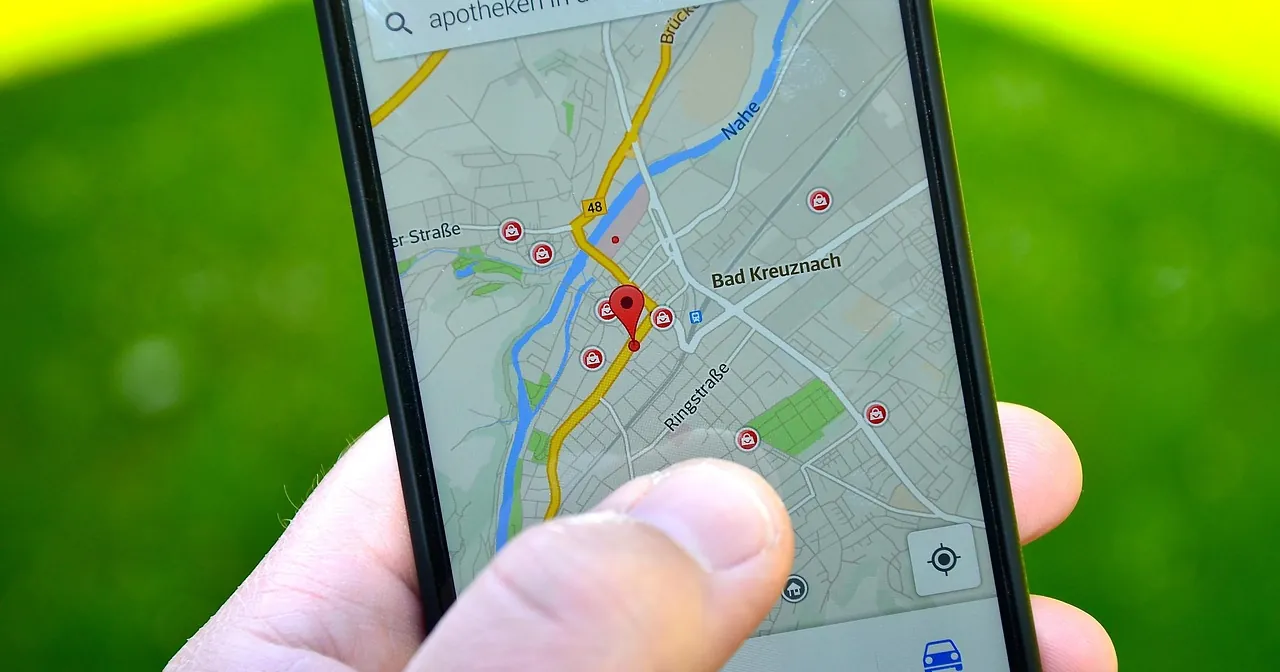
Search for “pharmacy near me” in Dubai Marina or “car wash” in Riyadh and the first thing you usually see is not a list of websites. It is a map with a short list of businesses, their star ratings, opening hours and a call button. Getting into that list is what local SEO is about, and for any business that serves customers in a place, it is often the shortest route from a search to a sale.
This guide is written for owners and marketers in the UAE, Saudi Arabia and the wider Gulf. It covers how to set up and verify a Google Business Profile, what Google itself says decides local rankings, how to earn reviews without breaking the rules, and how to measure what the map actually sends you.
One promise before we start: every rule and number here comes from Google’s own help pages, linked in the text, with the month we checked them. You will not find invented figures about how many reviews you “need” or how many weeks it takes to rank, because Google does not publish such numbers.
What is local SEO, and how is it different from regular SEO?
Regular SEO is about ranking your website’s pages in the classic list of blue links. Local SEO is about showing up when a search has local intent: the person wants something near them, whether or not they typed a city name. Google often answers those searches with a map and a set of business listings, known informally as the local pack.
Those listings come from Google Business Profiles, not directly from your website. That is why a small shop with no website at all can outrank a large company with an excellent site, if its profile is more complete, closer to the searcher and better known.
If you run an online store, the ranking work for your product and category pages is a different job, which we cover in our 90-day e-commerce SEO plan. This article stays with the map.
Who is eligible for a Business Profile?
According to Google’s guidelines, a business qualifies if it has a physical location that customers can visit, or if it travels to customers where they are, like an AC technician or a home-cleaning service. Google’s help page also says plainly that Business Profiles are not for online-only businesses. We come back to that in the section on e-commerce stores.
Local SEO step 1: set up and verify your Google Business Profile
The steps below follow Google’s help page on how to add or claim your Business Profile and its page on verification. The interface changes slightly between mobile and desktop and from country to country, but the logic stays the same.
- Search for your business first. A customer or Google may already have added it. If it exists, request ownership rather than creating a duplicate.
- Use a Google Account that belongs to the business. Gmail or a company-domain address both work. Avoid tying the profile to a personal account of an employee who may leave.
- Enter the name exactly as it appears on your signage. No extra words. The mistakes section explains why.
- Pick your primary category. It should say what the business is, not list everything it does.
- Set your location. Depending on the business, that is a street address, a service area or a pin on the map.
- Add phone, website and hours. Make sure someone actually answers that phone.
- Verify the profile using whichever method Google offers you.
- Complete everything else: photos, description, services, products and attributes such as parking or card payments.
How verification works
Google chooses which verification methods you see based on your business type, region and the public information about you. Its help page lists phone or text codes, email, a live video call with a support representative, a video recording, and a postcard carrying a 5-digit code.
For postcards, Google says most codes arrive within 14 days and that codes expire after 30 days. It also warns against requesting a new code while you wait, because that cancels the one in the post. After you complete verification, the review can take up to 5 business days (Google’s verification help page, checked October 2026). These timings can change, so check the page before you start.
If video recording is offered, Google recommends using it. Plan the clip before you press record: the signage outside, the entrance, then proof that you run the place, such as equipment, the payment terminal or your trade licence. And do not edit your name, address or category while waiting for a code, because Google says the code will then fail.
Choosing categories for local SEO
Google’s guidelines say to use as few categories as possible to describe your core business. A category describes what the business is, not its services or amenities, and it should not be used as a keyword field. A shawarma restaurant is a shawarma restaurant, not “delivery”, “catering” and “late-night food”.
A useful exercise is to look at the businesses that already show up for your main searches in your district and note their primary categories. Then put the detail where it belongs: in the services and products sections of your profile.
Service areas for businesses that go to the customer
If you serve customers at their location and do not receive them at your address, you are a service-area business, and Google asks you to hide your address. You can add up to 20 service areas based on cities, postal codes or other areas, and Google advises that the overall area should not extend beyond about 2 hours of driving time from your base (Google’s service area help page, checked October 2026).
For example, a pest-control company based in Sharjah that also works in Ajman and Dubai adds those cities as service areas. It does not invent an address in each city. A shop that welcomes customers and also delivers keeps its address visible and adds service areas alongside it.

Local SEO step 2: understand Google’s three ranking factors
Most guessing about local SEO disappears once you read Google’s own page on how to improve your local ranking. It names three main factors:
- Relevance: how well a Business Profile matches what someone is searching for. This is why Google asks for complete and detailed information.
- Distance: how far each business is from the person searching. If the searcher does not share a location, Google uses what it knows about them.
- Prominence: how well known a business is. Google says links from other websites, and your review count and ratings, contribute to it.
The same page includes a sentence worth printing out: there is no way to request or pay for a better local ranking on Google. Map ads do exist, but they are a separate paid placement, labelled as ads. What they cost is a Google Ads question, not a local SEO one.
What you can and cannot control in local SEO
You cannot move your shop closer to every searcher, so distance is largely fixed. Relevance is yours to shape through a complete profile, an accurate category and well-described services. Prominence you influence over time through reviews, reputation, links and mentions of your business elsewhere on the web.
This explains why a shop slightly further away sometimes ranks above a nearer one. Its profile is fuller, its reviews are more numerous and more recent, and its name is better known locally. Distance matters, but it is one factor out of three.
Google’s own local SEO tips, in short
- Enter complete, accurate information: address, phone, category and attributes such as parking or Wi-Fi.
- Verify your location; Google says verified businesses are more likely to show in results.
- Keep hours accurate, and add special hours for holidays and events.
- Reply to reviews; Google says it shows customers you value their feedback.
- Add real photos and videos of what you offer, not generic stock images.
Local SEO step 3: earn reviews the right way
Reviews feed prominence, and before that they shape the decision of a customer comparing three businesses on a map. That is exactly why some businesses take shortcuts that end with deleted reviews or a restricted profile.
What Google prohibits
Google’s prohibited and restricted content policy for Maps is clear on these points:
- Fake engagement is not allowed and will be removed, including reviews paid for directly or in kind.
- Merchants may not offer incentives such as payment, discounts, or free goods or services in exchange for a review, for changing a review, or for removing a negative one.
- Merchants may not discourage or prohibit negative reviews, or selectively solicit positive reviews from customers.
- Staff should not require or pressure customers to leave ratings or reviews while they are on the premises.
In practice, “a discount on your next order for a 5-star review” breaks the policy, and so does “a free dessert for any review”, even without a star requirement. The same goes for review-gating flows that ask “Were you happy?” and send only the happy customers to Google.
Ethical ways to get more reviews for local SEO
The same policy allows you to encourage genuine reviews, as long as there is no incentive and no attempt to steer the rating or content. Google’s help page on customer reviews notes that you can ask customers to visit a link or scan a QR code, and that reviewers need to be signed in to a Google Account.
- Print the review QR code on receipts or on a thank-you card in the parcel, with a neutral line such as “Your feedback helps us and helps other customers.”
- Send the review link to every customer after delivery or after the job is done, not just the happy ones. A single WhatsApp message after the order is enough.
- Train staff to mention reviews politely, without hovering until the customer writes one.
- Ask at the right moment: after the customer has collected the car and driven it, not before the inspection.
Replying to reviews
Google advises replies that are polite, brief and helpful, warns against generic thank-yous, and says replies should not be used to promote offers. Never share a reviewer’s private details, and move complicated issues to phone or email.
A reply to a negative review is really written for everyone who reads it later. Apologise where it is warranted, explain what you changed, and do not argue. Readers judge the reply as much as the complaint.

Local SEO step 4: keep your NAP consistent everywhere
NAP stands for name, address and phone. The idea is simple: your business details should look the same on your Google profile, your website, your social accounts, delivery apps, local directories and even your email signature.
Why does this matter for local SEO? Prominence is partly built from what Google finds about you across the web. When it finds two names and three phone numbers, it is harder to connect those signals to one business, and customers do not know which number to call either.
A practical NAP clean-up routine for local SEO
- Write a reference version of your name, address and phone, in both English and Arabic, in one shared document.
- List every place your business appears: website, Instagram, Snapchat, TikTok, delivery apps, local directories, marketplaces.
- Correct each one to match the reference, starting with the most visited.
- Use a number that reaches the branch directly. Google’s guidelines ask for a number under the business’s direct control and prefer local numbers over central call-centre lines.
- When you move or change numbers, update every listing in the same week.
The Gulf address problem
Many addresses in the UAE and Saudi Arabia rely on area names and landmarks more than on building numbers. Check that your map pin sits on the correct entrance, not in the middle of the district or on the building next door. In Saudi Arabia, if you have a National Address, use the same format everywhere.
Also pick one spelling and stick to it. “Sheikh Zayed Road”, “SZR” and “Sh. Zayed Rd” on three different platforms look like three different places to a machine.
Local SEO step 5: support the profile with your website
The profile is your shop window, but your website strengthens relevance and prominence. A clear page for your Dubai branch, with address, phone, hours and services, makes the connection between your site and that place easy for Google and for customers. This is where on-page SEO and local SEO meet.
Local landing pages that support local SEO
- One page per real branch, with its own address, phone, embedded map and photos from inside.
- Content specific to that branch: services available there, parking, directions, nearby landmarks.
- Point the website button on each Business Profile to that branch page, not the homepage, if you have several locations.
- Avoid pages for cities where you have no branch or real service, built by swapping the city name. They help no one and weaken the site.
LocalBusiness structured data, briefly
Structured data is code that describes your business in a format machines understand. Google’s LocalBusiness documentation for developers lists name and address as required properties, and recommends properties such as geo coordinates, openingHoursSpecification, telephone, url and priceRange.
Google also says to use the most specific type available, such as Restaurant rather than the generic LocalBusiness. The practical rule: the data in the code must match what is on the page and on your profile. Page speed is its own topic, but a slow branch page on mobile loses the visitor who just tapped through from the map.
Does local SEO matter for online stores?
It depends on how your business actually operates. Google’s help page says Business Profiles are not for online-only businesses. If your store runs on Salla, Zid or Shopify with no shop, no pickup point and no on-site service, you are not eligible for a standard profile, and inventing an address to get one is a guideline violation.
When it does matter
- You have a showroom or shop that receives customers, even if most sales happen online.
- You run a pickup point that customers genuinely visit during posted hours.
- You provide a service at the customer’s location: furniture assembly, device repair, event setup.
- You sell things people search for with “near me” intent, such as flowers, sweets, perfume or gifts.
In these cases local SEO pays twice: the map brings walk-ins, and a well-reviewed showroom makes shoppers trust the online store more.
When it does not
If you ship across the GCC from a warehouse no customer visits, local SEO is a low priority and your time is better spent on product and category SEO, paid ads and channels such as WhatsApp marketing. Consistent business details still help your reputation. Choosing between Salla, Zid and Shopify, or getting an e-commerce licence in the UAE, are separate questions with no direct link to the map.
Common local SEO mistakes and how to fix them
Keyword stuffing in the business name
The classic example: “Al Reef Restaurant – Best Grills in Dubai – Fast Delivery”. Google’s guidelines say your name should reflect your real-world name as used on signage, your website and stationery, and that including unnecessary information in the name is not permitted and can lead to suspension.
Banned additions include marketing taglines, store codes, hours, phone numbers or URLs, service descriptions and location details. A stuffed name can look like it works for a while, but it puts the whole profile at risk, and anyone can suggest an edit. Put your keywords in categories, services, the description and posts instead.
Fake addresses and virtual offices
Google does not accept PO boxes or mailboxes at remote locations, and a rented mailing address where you do not actually operate is not eligible. Co-working spaces qualify only with clear signage, customers received during business hours, and your own staff on site (Google’s guidelines for representing your business, checked October 2026).
Creating profiles for branches that do not exist, to cover other cities, can end with every profile suspended, including the real one. If you genuinely serve other cities, service areas are the right tool.
Other local SEO mistakes we see often
- Duplicate profiles for the same place, usually after a change of manager or account.
- Hours not updated for Ramadan and Eid, so customers arrive to a closed door and leave an angry review.
- A phone number nobody answers, or a call-centre number that routes to another branch.
- Ignoring reviews, or replying with discount offers, which Google advises against.
- A website link that points to an unrelated page, or to a page that no longer works.
- Old photos that no longer match the shop after a refit.
Local SEO step 6: track results with UTM parameters
You cannot judge the profile without measuring it. The profile shows its own performance data such as calls, direction requests and website clicks, but in Google Analytics the visits from your profile’s website button usually blend into ordinary organic search.
The fix is to add UTM parameters to the website link on your profile. Google Analytics’ help page on campaign URLs says you should always use utm_source, utm_medium and utm_campaign, and that missing parameters show up as (not set) in reports. An example for a Dubai branch: example.com/dubai/?utm_source=google&utm_medium=organic&utm_campaign=gbp-dubai
Now map visits are separate from the rest of search, and you can see what visitors from each branch do on the site. Connecting those visits to calls and sales is conversion tracking, which deserves its own setup; our analytics and tracking service covers it if you need help.
What to review each month
- New reviews, average rating and the share you have replied to.
- Calls, direction requests and website clicks from the profile’s performance data.
- UTM-tagged sessions and what those visitors do on the site.
- How you appear for your key searches from different points in the city, because distance changes the results from one district to the next.

Local SEO in the UAE, Saudi Arabia and Kuwait
Language comes first. Customers in the Gulf search in Arabic and English, sometimes with Gulf spellings such as قوقل ماب (Google Maps) or with local district nicknames. Write your description and services in your customers’ words, in both languages where you serve both audiences.
Bilingual names need care. If your signage and trade licence carry an Arabic and an English name, use the name as it appears there. Do not invent a new translation for Google that appears nowhere else, because that breaks consistency.
Seasons change everything. Ramadan shifts opening hours for most businesses, as do Eid al-Fitr, Eid al-Adha and each country’s national day. Set special hours well before the season, and use posts for Ramadan timings and seasonal offers such as White Friday, never review replies.
Delivery apps are part of your footprint. Many Gulf restaurants and shops live on delivery platforms, which also display your name and address. Include them in your NAP routine and review them whenever a branch or number changes.
Paid social does not replace the map. Snapchat ads and TikTok ads reach nearby audiences well in Saudi Arabia and Kuwait, but someone who sees your ad and then searches your name on Google Maps should find a complete profile, recent reviews and correct hours. Good local SEO makes every other channel convert better.
Quick comparison by business type
| Business type | Address on profile | Service areas | First local SEO priority |
|---|---|---|---|
| Shop or restaurant that receives customers | Shown | Optional if you deliver | Category, photos, reviews |
| Business that goes to the customer (repairs, cleaning) | Hidden | Required | Service areas, phone |
| Hybrid (shop plus home service) | Shown | Added | Accurate hours and services |
| Online store with showroom or pickup point | Shown for the showroom | Case by case | NAP consistency, branch page |
| Online-only store | Not eligible | Not applicable | Store SEO and paid ads |
Local SEO checklist
Run through this list when you launch, then again every few months or whenever a branch, number or opening time changes:
- One profile per location, owned by a business account rather than an employee’s.
- Profile verified, with no edits to name, address or category while a code was pending.
- Name matches signage and licence, with no taglines or added city names.
- Primary category describes the business accurately; extra categories are few and real.
- Real address with the pin on the correct entrance, or a hidden address plus service areas for home-service businesses.
- A local phone number answered by someone at the branch.
- Correct regular hours, plus special hours for Ramadan and Eid.
- Services, products and attributes filled in.
- Recent, real photos of the front, interior, products and team.
- Review link or QR code offered to every customer, with no incentives.
- Every new review has a short, polite reply.
- NAP identical on the website, social profiles and delivery apps.
- A branch page on the website with LocalBusiness data that matches the profile.
- UTM parameters on the profile’s website link, so local SEO traffic is measured separately.
Conclusion
Local SEO is not a trick; it is accumulated housekeeping. A complete, verified profile, a real name, honest reviews gathered steadily, consistent details everywhere, a clear branch page and measurement that tells you what is happening. Google says there is no way to pay for a better local ranking, so there is no reason to risk your profile on shortcuts.
If you want someone to audit your profiles and website and build a local SEO plan for your branches in the UAE or Saudi Arabia, see our SEO service or get in touch.
FAQ
How does local SEO work?
Google ranks local results on three factors it names itself: relevance, distance and prominence. Local SEO improves the ones you can influence: a complete, accurate profile for relevance, and reviews, links and consistent mentions across the web for prominence.
What is local SEO in simple words?
Local SEO is the work of making your business show up when people nearby search for what you sell. In practice it means a complete Google Business Profile, honest reviews, consistent contact details across the web and a website that backs them up.
How much does local SEO cost?
There is no official price, because Google does not charge for local rankings and says you cannot pay for a better one. What you pay for is the work: profile setup, review routines, NAP clean-up and branch pages. The effort, and so the cost of local SEO, grows with the number of branches and how competitive your area is.
Can I pay Google to rank higher on Maps?
Not in the free results. Google’s help page states there is no way to request or pay for a better local ranking. You can buy map ads through Google Ads, but they are labelled as ads and do not change your organic position.
How long until my business appears after verification?
Google says the review after verification can take up to 5 business days, and longer in rare cases. There is no fixed timeline for ranking well, because that depends on relevance, distance, prominence and how competitive your area is.
Can I have a Business Profile without a shop?
Yes, if you serve customers at their location: add service areas and hide your address. If you only sell online with no place customers visit and no on-site service, Google says Business Profiles are not for online-only businesses.
Can I remove negative reviews?
You cannot remove a genuine review because you dislike it. If a review breaks Google’s content policies, for example fake or abusive content, you can report it. For honest negative reviews, a calm reply and a real fix do more for you than trying to hide them.
Why does a competitor further away rank above me?
Because distance is only one of three factors. The competitor may be more relevant to the search, with a more precise category and clearer services, or more prominent, with more and fresher reviews and more mentions online. Compare their profile with yours line by line.
What are the best local SEO tools?
Start with the free ones: your Business Profile’s performance data, Google Search Console and Google Analytics with UTM-tagged links. Paid rank trackers that check results from several points in a city are useful for multi-branch businesses, but they do not replace a complete profile and real reviews.
Do I need a separate profile for each branch?
Yes. Each real location that receives customers gets its own profile with its own address, phone and hours. Google’s guidelines say each location should have only one profile, so never create two for the same branch.